

Sea grapes
What are sea grapes?
Feb
WHAT IS SEA GRAPE?
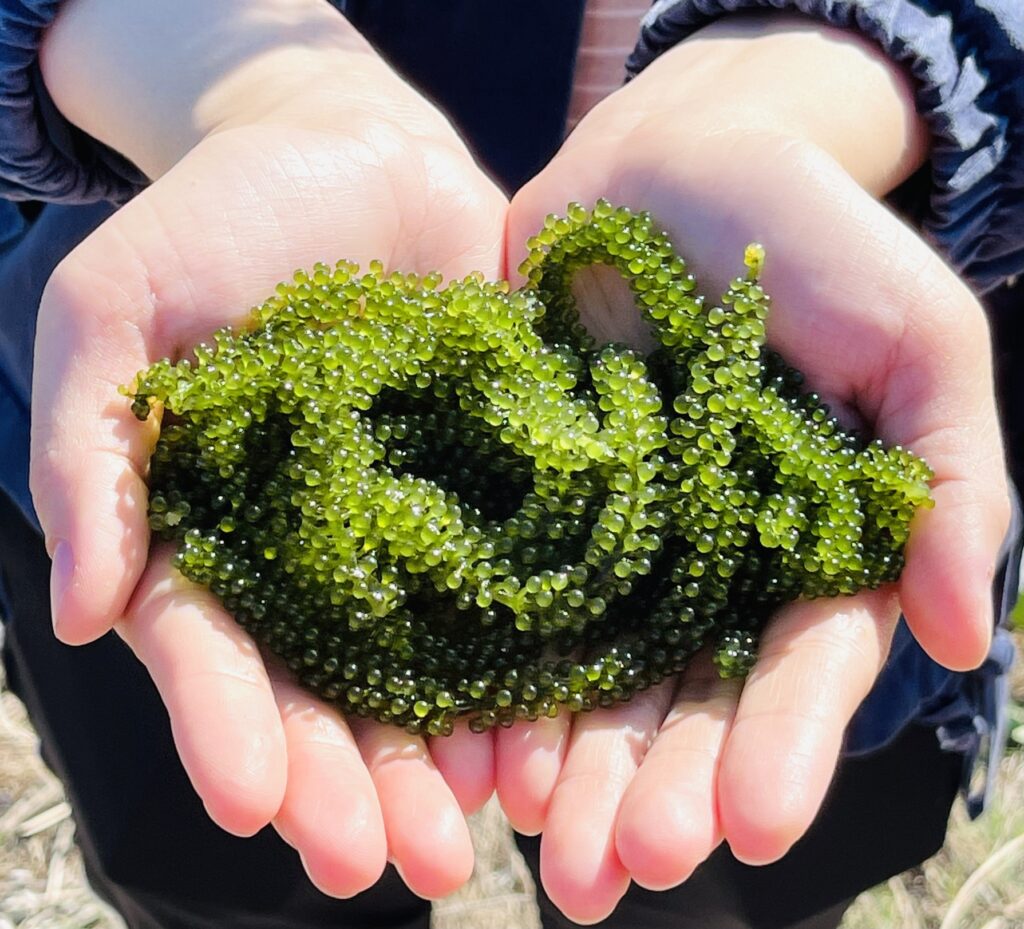
Sea grapes (scientific name: Caulerpa lentillifera), also known as grape seaweed, is a species of seaweed belonging to the Caulerpaceae family, used as a very nutritious vegetable. The British call it green caviar, the Japanese call it sea grapes (海ぶどう, umi-budō). Sea grapes are naturally distributed in the region Southeast Asia, Japan (around the island Okinawa) and regional islands Pacific. In 2006, scientists from the Nha Trang Institute of Oceanography found this species on the island wealth, conscious Binh Thuan, with a much smaller size than sea grapes Philippines or Japan.
Currently, Vietnam has successfully grown sea grape varieties from Japan in Dong Ha, Hai Ninh, Hon Khoi, Khanh Hoa Province. Sea grapes are multicellular algae.
Sea grapes is a very nutritious type of seaweed that can be eaten as a vegetable but has a much higher nutritional value than regular fruits and vegetables. Because of its shape like a bunch of grapes, this food is called sea grapes. Sea grapes are also known as green caviar (caviar or caviar is a very expensive dish due to its high nutritional value).
Sea grapes are classified as follows:
- Phylum: Chlophyta (green algae)
- Class: Chlorophycceae
- Order: Caulerpaceae
- Family: Caulerpaceae
- Variety: Caulerpa JVF Lamouroux, 1809
- Species: Caulerpa lentilifera J. Ag. 1837
- Japanese name: Umibudo
- English name: Seaweed Grape.
Currently, the demand for Sea Grapes is increasing while natural exploitation is very limited. Currently, people grow Sea Grapes to meet the demand.
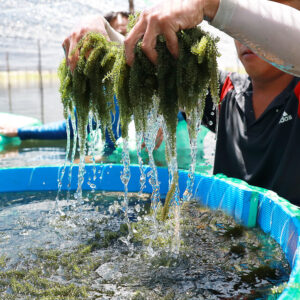
Seaweed can be grown in its natural environment, which is shallow and quiet seas, or in ponds and even in cages at sea. Sea Grapes absorb nutrients from the water environment through "branches" and "fruits" to grow. Under appropriate light, temperature, salinity and nutrients conditions, Seaweed Grapes grow very quickly, with a short harvest time of 20 to 30 days.
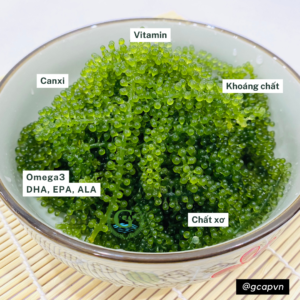
Benefits of sea grapes
Conclude
GCAPVN Company Limited
Website: https://gcapvn.com
Hotline: 090 559 0098 – 096 414 0855
Fanpage: GCAPVN
