


Sea grapes
Instructions for using sea grapes that are delicious and crispy, not fishy
Jan
Is sea grape salty? Is it fishy?
This is the question many people ask when they have not eaten, or are eating sea grapes for the first time.
The answer is yes. Because sea grapes live in a seawater environment, the seaweed will have a naturally salty, slightly fishy taste. However, the salty and fishy taste is insignificant. This article will guide you how to use sea grapes properly and the secret to eliminating the salty and slightly fishy taste, using more delicious seaweed, preserving the original natural flavor and maintaining the nutritional content of the food. This is great!
Instructions for using sea grapes
Currently, there are 2 popular types of sea grapes (fresh sea grapes and dehydrated sea grapes) that you can enjoy with a slightly different usage!
Instructions for using dehydrated sea grapes;
Dehydrated sea grapes are dehydrated from fresh sea grapes for longer preservation time, compact and convenient. Therefore, when using, you need to soak the seaweed in water to bloom back to its original size with the 4 steps below;
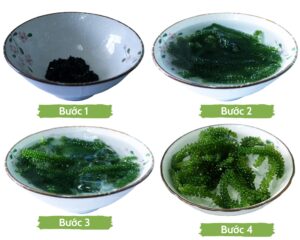
Step 1: Put the seaweed in a bowl of clean water (0.5 liters of water for 20 grams of dehydrated seaweed) and soak for about 3 minutes, then the seaweed will swell back to its original fresh state.
Step 2: Change the water, soak the seaweed in a bowl of clean water for about 3 more minutes to make the seaweed less salty. The longer you soak the seaweed, the blander it will be, so depending on each person's salty taste, you can soak for less or longer time (optional). Can be washed multiple times like green vegetables).
Step 3: Soak seaweed in a bowl of ice water to make it crispier and more delicious, reducing the fishy taste of the sea.
Step 4: Pick out the seaweed and use it immediately as green vegetables with your choice of dipping sauces such as mayonnaise, roasted sesame sauce, fish sauce, soy sauce, chili sauce... or make a salad/sauce.

Instructions for using fresh sea grapes;
Fresh sea grapes, after being harvested from the farming area, will be passed through the stages of cleaning impurities and bacteria, then packed into bags/boxes and delivered to consumers.
Before using, you need to prepare a few more steps to reduce the salty taste and slight fishy smell of sea grapes;
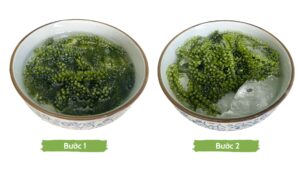
Step 1: Wash seaweed with clean water 2 - 3 times (or soak seaweed in clean water for about 3 minutes. A characteristic of seaweed is that the more it is soaked, the salinity decreases, so the time to soak seaweed depends on (your salty taste)
Step 2: Change the water and soak the seaweed in a bowl of ice water to make it crispier and tastier, reducing the fishy taste. Take them out and use them as green vegetables with any dipping sauce of your choice, or prepare them into salads, or serve with Sushi, Sashimi...

The secret to using sea grapes better
- For fresh seaweed: absolutely do not store seaweed in the refrigerator, store seaweed in a cool, airtight place. Avoid direct sunlight and avoid high temperature places. Use as much as you can, and tie the rest in a sealed bag (box) to avoid wind from damaging the seaweed.
- Sea grapes are dehydrated and stored in the refrigerator for a longer shelf life and the seaweed is always fresh and delicious.
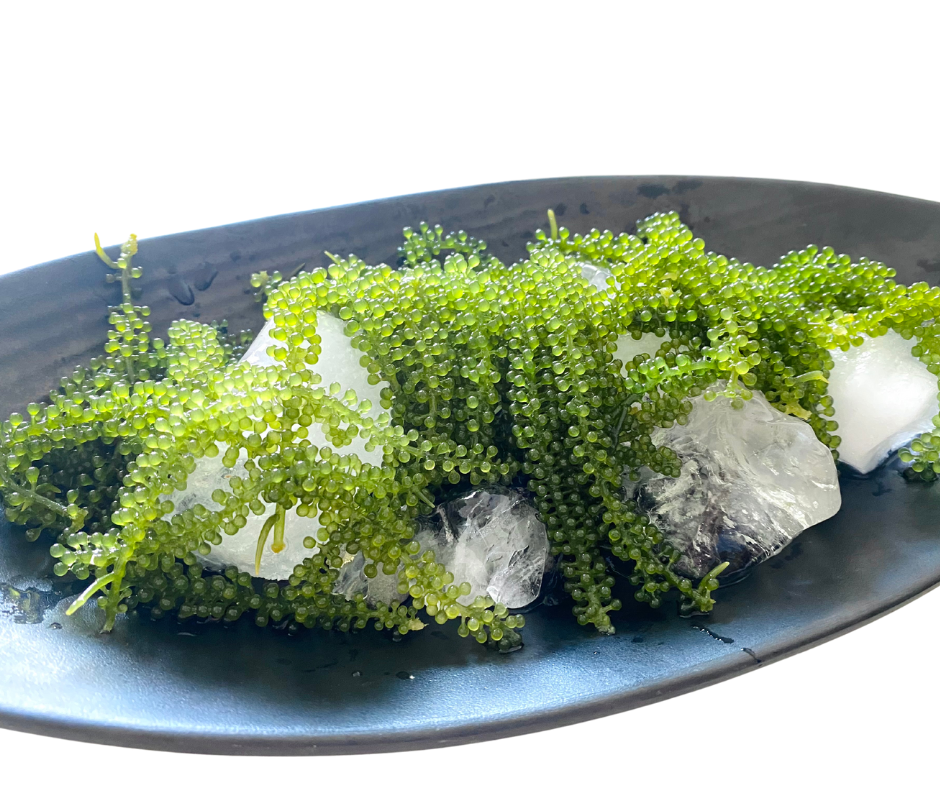
- To reduce the typical fishy and salty taste of the sea and increase the crispness, soak the seaweed in ice water or place it on ice when serving.
- Do not stir-fry over high heat to avoid shrinking the seaweed
- When making salad or stir-fry, mix the seaweed last and serve immediately afterward
- Use seaweed for 30 minutes to keep it fresh and crispy. Do not leave sea grapes in the outside environment for too long, or the seaweed will shrink and become soft.
So, through this article, you now know how to use sea grapes properly, right? Hope you and your family have delicious, nutritious meals with sea grapes!
GCAPVN Company Limited
Website: https://gcapvn.com
Hotline: 090 559 0098 – 096 414 0855
Fanpage: GCAPVN
